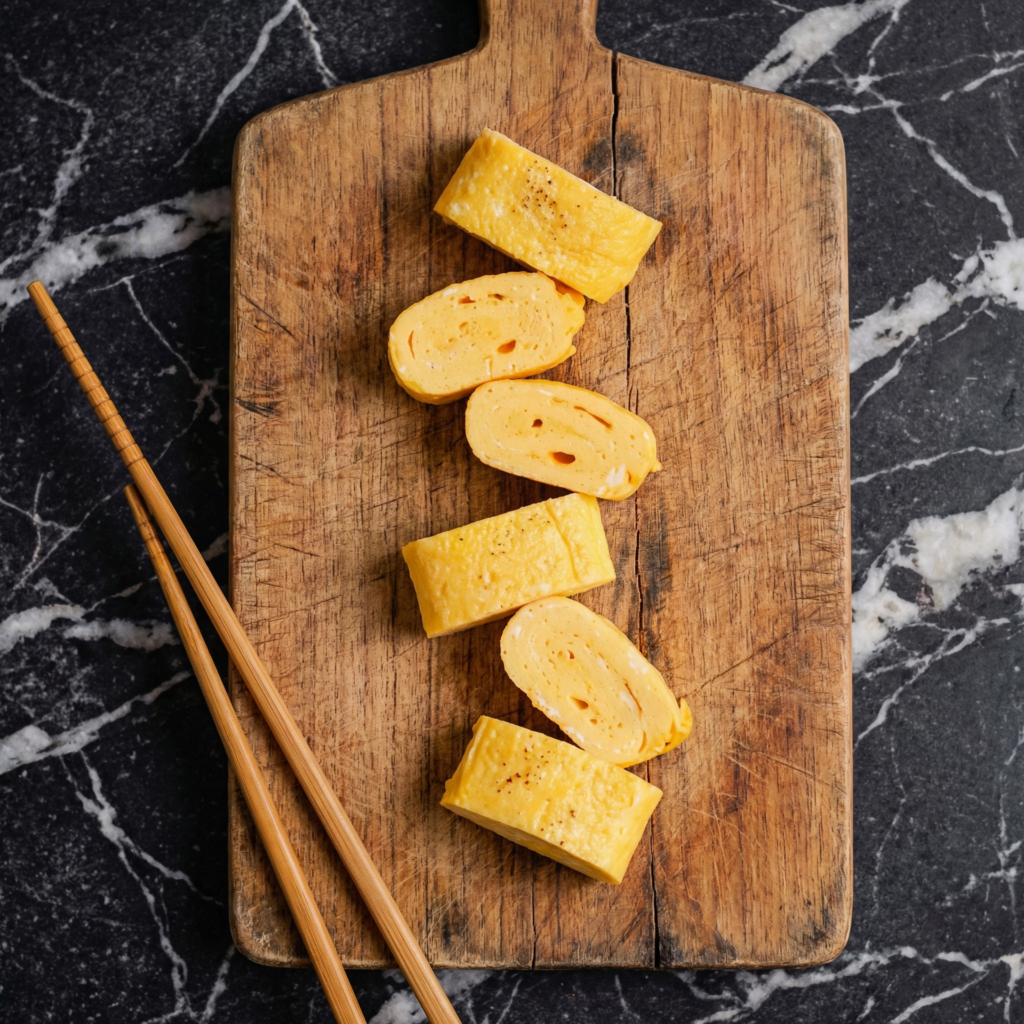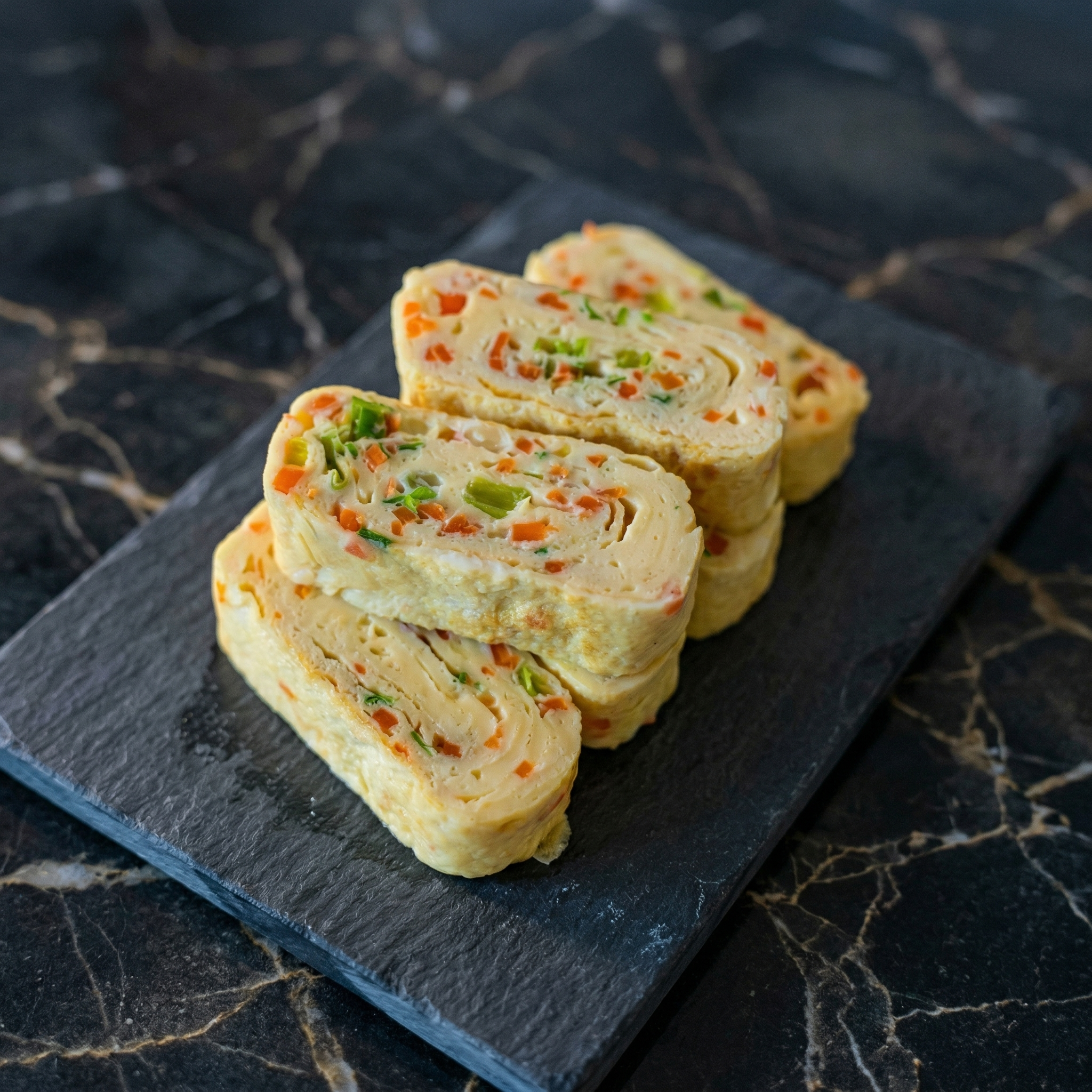
Tamagoyaki is the Japanese omelette that looks like art. Thin layers of seasoned egg, rolled into a perfect golden log, sliced to reveal a beautiful spiral of tender, slightly sweet custard. It’s served for breakfast, tucked into bento boxes, draped over sushi rice, and admired for its delicate beauty.
The technique takes practice—but that’s part of the joy. Each roll teaches you something. The first few might be rustic, but with a little patience (and a rectangular pan), you’ll be making restaurant-quality tamagoyaki that tastes as good as it looks. Sweet, savory, and deeply satisfying.
Serves 2 (makes 1 roll).
Step-by-Step Instructions
Make the Egg Mixture
In a small bowl, combine dashi, soy sauce, mirin, sugar, and salt. Stir until sugar dissolves.
Crack eggs into a separate bowl. Using chopsticks or a fork, stir eggs in a cutting motion (not whisking) to combine whites and yolks without incorporating too much air. You want a smooth, uniform mixture.
Pour the seasoned liquid into the eggs and gently mix until combined. Strain through a fine-mesh sieve if you want an ultra-smooth texture (optional but recommended).
Heat the Pan
Heat a rectangular tamagoyaki pan (or small non-stick skillet) over medium-low heat.
Lightly oil the pan using a paper towel or brush. You’ll need to re-oil between each layer.
First Layer
Pour a thin layer of egg mixture into the pan, tilting to cover the bottom evenly. Use about ⅓ of the mixture.
Cook until the edges are set and the surface is slightly runny, about 30-45 seconds.
Using chopsticks or a spatula, gently roll the egg from one end to the other. Push the rolled egg to the far side of the pan.
Second Layer
Re-oil the empty side of the pan. Pour another thin layer of egg mixture, tilting to cover the bottom.
Lift the existing roll slightly to let uncooked egg flow underneath.
Cook until set, then roll again, wrapping the new layer around the existing roll.
Push the roll back to the far side of the pan.
Remaining Layers
Repeat the process with the remaining egg mixture (usually 2-3 more layers).
After each roll, gently press the tamagoyaki with a spatula to shape it into a neat rectangular log.
If adding fillings like green onions, sprinkle them on before rolling each layer.
Shape and Rest
Once all egg mixture is used, press the tamagoyaki gently with the spatula to create a uniform rectangular shape.
Transfer to a bamboo sushi mat or a piece of plastic wrap and roll to tighten. Let rest for 5 minutes to set the shape.
Slice and Serve
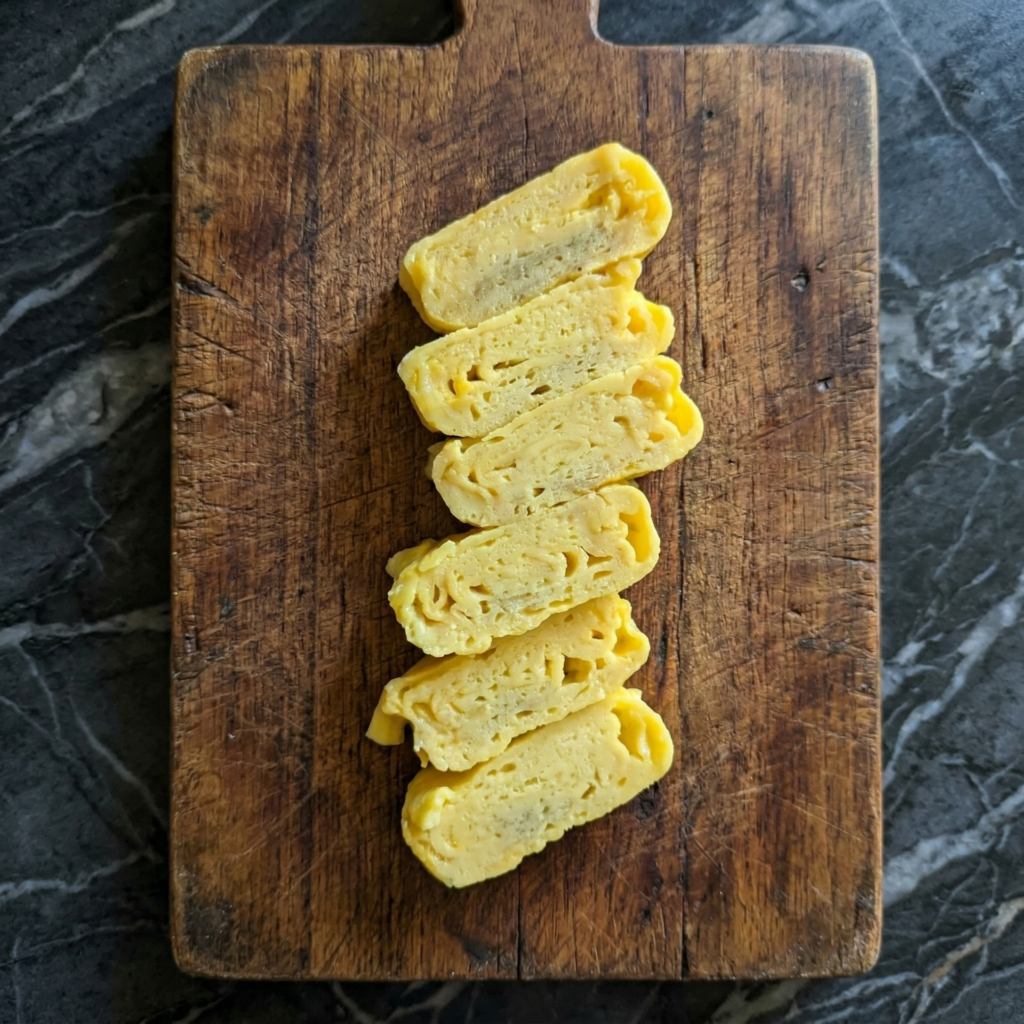
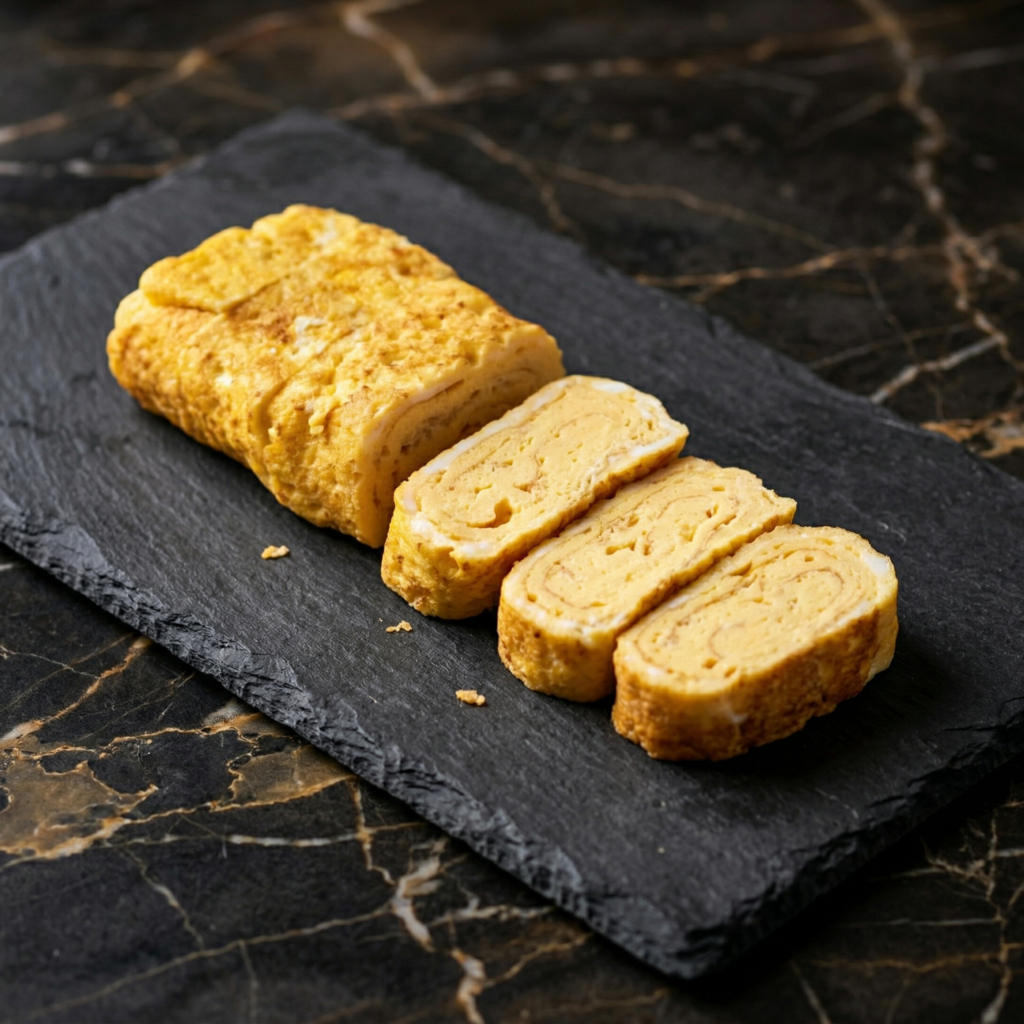
Slice the tamagoyaki into ½-inch thick pieces.
Arrange on a plate with grated daikon and soy sauce for dipping.
Take a bite. Tender, layered, sweet-savory perfection. You’ve just mastered Japanese home cooking.
Summary
Prep Time: 5 minutes | Cook Time: 10 minutes | Total Time: 15 minutes
Yield: 1 roll (serves 2)
Difficulty: Practice makes perfect
Storage Notes
Leftovers:
Store tamagoyaki in an airtight container in the fridge for up to 3 days. It’s delicious cold or at room temperature—perfect for bento boxes.
Reheating:
Skillet (gentle): Reheat over low heat for 1-2 minutes per side. Microwave: 20-30 seconds at reduced power—be careful not to overcook. Cold tamagoyaki is traditional in bento and equally delicious.
Make Ahead:
Tamagoyaki can be made a day in advance and stored in the fridge. Slice just before serving. It’s a staple of Japanese bento lunches precisely because it keeps so well.
What to Serve With Tamagoyaki:
- Steamed rice and miso soup (traditional Japanese breakfast)
- As a topping for sushi rice (tamago nigiri)
- In a bento box with pickled vegetables and grilled fish
- As a side dish for ramen or udon
- With grated daikon and soy sauce as an appetizer
- Cold, as a snack or picnic food